Sunday, March 25, 2012

Immanuel Wallerstein on "The Syrian Impasse"


The Syrian Impasse

Commentary No. 323, Feb. 15, 2012
Bachar al-Assad has risen to the heights of being one of the least popular men in the world. He is denounced as a tyrant, indeed a very bloody tyrant, by almost everyone. Even those governments that refuse to denounce him seem to be counseling him to curb his repressive ways and to make some sort of political concessions to his internal opponents.
So, how is it that he ignores all this advice and proceeds to continue to use maximum force to continue political control of Syria? Why is there no outside intervention to force his removal from office? To answer these questions, let us start with assessing his strengths. To start with, he has a reasonably strong army, and up to now, with a few exceptions, the army and other structures of force in the country have stayed loyal to the regime. Secondly, he still seems to command the support of at least half of the population in what is increasingly being described as a civil war.
The key government posts and the officer corps are in the hands of the Alawi, a branch of Shi’a Islam. The Alawi are a minority of the population and certainly fear what would happen to them if the opposition forces, largely Sunni, were to come to power. In addition, the other significant minority forces – the Christians, the Druze, and the Kurds – seem to be equally wary of a Sunni government. Finally, the large merchant bourgeoisie have yet to turn against Assad and the Baath regime.
But is this really enough? If this were all, I doubt that Assad could really hold out much longer. The regime is being squeezed economically. The opposition Free Syrian Army is being fed arms by Iraqi Sunnis and probably Qatar. And the chorus of denunciations in the world press and by politicians of all stripes grows louder by the day
Yet, I don’t think that, a year or two from now, we will find that Assad is gone or the regime basically changed. The reason is that those who are denouncing him the loudest do not really want him to go. Let us take them one by one.
Saudi Arabia: The Foreign Minister told the New York Times that “violence had to be stopped and the Syrian government not given any more chances.” This sounds really strong until you notice that he added that “international intervention had to be ruled out.” The fact is that Saudi Arabia wants the credit of opposing Assad but is very afraid of a successor government. It knows that in a post-Assad (probably fairly anarchic) Syria, al-Qaeda would find a base. And the Saudis know that al-Qaeda’s number one objective is to overthrow the Saudi regime. Ergo, “no international intervention.”
Israel: Yes, the Israelis continue to obsess about Iran. And yes, Baathist Syria continues to be an Iran-friendly power. But when all is said and done, Syria has been a relatively quiet Arab neighbor, an island of stability for the Israelis. Yes, the Syrians aid Hezbollah, but Hezbollah too has been relatively quiet. Why would the Israelis really want to take the risk of a turbulent post-Baathist Syria? Who would then wield power, and might they not have to improve their credentials by expanding jihad against Israel? And wouldn’t the fall of Assad lead to upsetting the relative quiet and stability that Lebanon now seems to enjoy, and might this not end up with the further strengthening and renewed radicalism of Hezbollah? Israel has a lot to lose, and not too much to gain, if Assad falls.
The United States: The U.S. government talks a good line. But have you noticed how wary it is in practice? The Washington Post headlined an article on Feb. 11, “As carnage builds, U.S. sees `no good options’ on Syria.” The story points out that the U.S. government has “no appetite for a military intervention.” No appetite, despite the pressure of neocon intellectuals like Charles Krauthammer who is honest enough to admit “it’s not just about freedom.” It’s really, he says, about undoing the regime in Iran.
But isn’t that exactly why Obama and his advisors see no good options? They were pressured into the Libyan operation. The U.S. didn’t lose many lives, but did they really gain geopolitical advantage as a result? Is the new Libyan regime, if one can say there is a new Libyan regime, something better? Or is this the beginning of a long internal instability, as Iraq has turned out to be?
So, when Russia vetoed the U.N. resolution on Syria, I can imagine a sigh of relief in Washington. The pressure to up the ante and begin a Libyan-style intervention was lifted. Obama was protected against Republican harassment on Syria by the Russian veto. And Susan Rice, the U.S. Ambassador to the United Nations, could shift all blame to the Russians. They were “disgusting,” she said, oh so diplomatically.
France: Always nostalgic for their once-dominant role in Syria, Foreign Minister Alain Juppé shouts and denounces. But troops? You’ve got to be kidding. There’s an election coming up, and sending troops would not be at all popular, especially since this would be no piece of cake, as was Libya.
Turkey: Turkey has improved its relations with the Arab world incredibly in the last decade. It’s definitely unhappy about the civil war on its borders. It would love to see some kind of political compromise. But Foreign Minister Ahmet Davutoglu is quoted as guaranteeing that “Turkey is not providing arms or support to army defectors.” Turkey wants essentially to be friends to all sides. And besides, Turkey has its own Kurdish question, and Syria might offer active support, which hitherto it has refrained from doing.
So, who wants to intervene in Syria? Perhaps Qatar. But Qatar, however wealthy it is, is scarcely a major military power. The bottom line is that, however loud the rhetoric and however ugly the civil war, no one really, really wants Assad to go. So, in all probability, he will stay.

  • facebook
  • twitter
  • email

T

Immanuel Wallerstein on "Israel: Its Fantasies and Its Realities"


Israel: Its Fantasies and Its Realities

Commentary No. 323, Feb. 15, 2012
Prime Minister Benjamin Netanyahu of Israel visited the United States in the beginning of March 2012. He came to say, once again, that a nuclear Iran would pose an existential threat to Israel, and that Israel reserved the right to take timely action to counter this. President Obama asserted just as vigorously that, yes, a nuclear Iran would pose an existential threat to Israel, and that the United States could not countenance this, but that the timing of Netanyahu was off. Non-military action against Iran should be exhausted first before thinking of other action.
Let us examine the premises. Why would Iran, with nuclear weapons, pose an existential threat to Israel? That is, who believes that, if Iran had nuclear weapons, the Iranian authorities would use them to bomb Israel? Actually, no one in any position of responsibility in Israel, in the United States, or elsewhere in the world believes this. They only say they do.
Let us start with the ostensible arguments. Israeli officials point to the fact that Pres. Ahmadinejad and others have said that they wish to “wipe out” (or some such phrase) Israel. Of course, many experts have pointed out that the translation is incorrect. But even if it were accurate, does that do anything more than repeat the long-standing position of large numbers of people in the Middle East opposing the concept of a Jewish state and favoring various other outcomes to the long-standing dispute?
Why on earth would Iran bomb Israel? They would kill at least as many Arabs as Israelis, if they did. They would be subject to immediate retaliation by Israel, which is well-armed in nuclear weapons. Iran bombing Israel is a fantasy that no responsible leader believes.
So, if they don’t believe it, why do they say it? The answer seems to me clear. Were Iran finally to have a few nuclear weapons, it would indeed change something. It would change the geopolitical balance in the Middle East and weaken politically the position of Israel. It would probably also lead to the rapid acquisition of nuclear weapons by a number of other countries. I think of Saudi Arabia, Egypt, and Turkey, to begin with.
Were either Israel or the United States to bomb Iran preemptively, there would be enormous political consequences immediately. First of all, it would almost certainly be relatively inefficacious in terms of stopping the Iranian project. Secondly, it would weaken politically the position of both Israel and the United States in the whole world. The two reasons together explain why there is so much opposition by the military and intelligence services of both Israel and the United States to the whole military discourse. What they fear is that the discourse would catch on and permit some political leaders not presently controlling the Israeli or U.S. governments to be foolish enough to start the war.
What Israel and the United States are locked into is a lose-lose situation. Whatever they do, they will lose politically. I believe they are aware of this, and neither Netanyahu nor Obama can figure out what really to do, and how to maintain their own political interests internally. So they spend their time blaming each other and blackmailing each other. In the meantime, the Iranian leadership uses the discourse to wave the patriotic banners and strengthen its internal position, which had been under serious assault not so long ago.
Meanwhile, back to Palestine, which remains a real issue for Israel, not a fantasy issue. Hamas has now made the decision to link its strategy to Egypt and the Muslim Brotherhood, which seems to be on the point of controlling the Egyptian government. Fatah clearly fears, correctly, that it might lose control of the West Bank to Hamas. Caught between Hamas and the U.S. government, President Abbas of the Palestine Authority is also in a lose-lose position and also does not know what to do. So he dithers, which does not seem to be the best survival tactic.
The future is with the Palestinian street. And I simply do not believe that it can be kept quiescent. Can Israel come to terms with the Palestinian street? We shall soon find out.
  • facebook
  • twitter
  • email

John Pilger weighs in on "The dirty war on WikiLeaks is now trial by media in Sweden"


The dirty war on WikiLeaks is now trial by media in Sweden

10 March 2012

Czj.jpg
War by media, says current military doctrine, is as important as the battlefield. This is because the real enemy is the public at home, whose manipulation and deception are essential for starting an unpopular colonial war. Like the invasions of Afghanistan and Iraq, attacks on Iran and Syria require a steady drip-effect on readers' and viewers' consciousness. This is the essence of a propaganda that rarely speaks its name.

To the chagrin of many in authority and the media, WikiLeaks has torn down the facade behind which rapacious western power and journalism  collude. This was an enduring taboo; the BBC could claim impartiality and expect people to believe it. Today, war by media is increasingly understood by the public, as is the trial by media of WikiLeaks' founder, and editor Julian Assange.

Assange will soon know if the Supreme Court in London is to allow his appeal against extradition to Sweden, where he faces allegations of sexual misconduct most of which were dismissed by a senior prosecutor in Stockholm and do not constitute a crime in Britain. On bail for 16 months, tagged and effectively under house arrest, he has been charged with nothing. His "crime" has been an epic form of investigative journalism: revealing to millions of people the lies and machinations of their politicians and officials and the barbarism of criminal war conducted in their name.  For this, as the American historian William Blum points out, "dozens of members of the American media and public officials have called for [his] execution or assassination". If he is passed from Sweden to the US, an orange jump suit, shackles and a fabricated unconstitutional indictment await him. And there go all who dare challenge rogue America.

In Britain, Assange's trial by media has been a campaign of character assassination, often cowardly and inhuman, reeking of jealousy of the courageous outsider, while books of perfidious hearsay have been published, movie deals struck and media careers launched or resuscitated on the assumption that he is too poor to sue. In Sweden, this trial by media has become, according to one observer there, "a full-on mobbing campaign with the victim denied a voice". For more than 18 months, the salacious Expressen, Sweden's equivalent of the Sun, has been fed the ingredients of a smear by Stockholm police. 

Expressen is the megaphone of the Swedish right, including the Conservative Party which dominates the governing coalition. Its latest "scoop" is an unsubstantiated story about "the great WikiLeaks war against Sweden". On 6 March, Expressen claimed, with no evidence, that WikiLeaks was running a conspiracy against Sweden and its foreign minister Carl Bildt. The pique is understandable. In a 2009 US embassy cable obtained by WikiLeaks, the Swedish elite's vaunted reputation for neutrality is exposed as sham. (Cable title: "Sweden puts neutrality in the Dustbin of History.")  Another US diplomatic cable reveals that "the extent of [Sweden's military and intelligence] co-operation [with Nato] is not widely known" and unless kept secret "would open up the government to domestic criticism". 

Swedish foreign policy is largely controlled by Bildt, whose obeisance to the US goes back to his defence of the Vietnam war and includes his leading role in George W. Bush's Committee for the Liberation of Iraq. He retains close ties to Republican Party extreme right figures such as the disgraced Bush spin doctor, Karl Rove. It is known that his government has "informally" discussed Assange's onward extradition to Washington, which has made its position clear. A secret Pentagon document describes US intelligence plans to destroy WikiLeaks' "centre of gravity" with "threats of exposure [and] criminal prosecution".  

In much of the Swedish media, proper journalistic scepticism about the allegations against Assange is overwhelmed by a defensive jingoism, as if the nation's honour is defiled by revelations about dodgy coppers and politicians, a universal breed. On Swedish Public TV "experts" debate not the country's deepening militarist state, and its service to Nato and Washington, but the state of Assange's mind and his "paranoia". A headline in Tuesday's Aftonbladet declared: "Assange's moral collapse". The article by Dan Josefsson suggests Bradley Manning, WikiLeaks' alleged source, may not be sane and attacks Assange for not protecting Manning from himself. That the source was anonymous and no connection has been demonstrated between Assange and Manning and that Aftonbladet, WikiLeaks' Swedish partner, had published the same leaks undeterred, was not mentioned - censorship by omission.

Ironically, this circus has performed under cover of some of the world's most enlightened laws protecting journalists, which attracted Assange to Sweden in 2010 to establish a base for WikiLeaks. Should his extradition be allowed, and with Damocles swords of malice and a vengeful Washington hanging over his head, who will protect him and provide the justice to which we all have a right?

Monday, March 12, 2012

Dangerous Myths of Fukushima


Exposing the "No Harm" Mantra

The Dangerous Myths of Fukushima

by JOSEPH MANGANO and JANETTE SHERMAN
The myth that Fukushima radiation levels were too low to harm humans persists, a year after the meltdown.  A March 2, 2012 New York Times article quoted Vanderbilt University professor John Boice: “there’s no opportunity for conducting epidemiological studies that have any chance for success – the doses are just too low.”  Wolfgang Weiss of the UN Scientific Committee on the Effects of Atomic Radiation also recently said doses observed in screening of Japanese people “are very low.”
Views like these are political, not scientific, virtually identical to what the nuclear industry cheerleaders claim.  Nuclear Energy Institute spokesperson Tony Pietrangelo issued a statement in June that “no health effects are expected among the Japanese people as a result of the events at Fukushima.”
In their haste to choke off all consideration of harm from Fukushima radiation, nuclear plant owners and their willing dupes in the scientific community built a castle against invaders – those open-minded researchers who would first conduct objective research BEFORE rushing to judgment.  The pro-nuclear chants of “no harm” and “no studies needed” are intended to be permanent, as part of damage control created by a dangerous technology that has produced yet another catastrophe.
But just one year after Fukushima, the “no harm” mantra is now being crowded by evidence – evidence to the contrary.
First, estimates of releases have soared.  The first reports issued by the Japanese government stated that emissions equaled 10% of 1986 Chernobyl emissions.  A few weeks later, they doubled that estimate to 20%.  By October 2011, an article in the journal Nature estimated Fukushima emissions to be more than double that of Chernobyl.  How anyone, let alone scientists, could call Fukushima doses “too low” to cause harm in the face of this evidence is astounding.
Where did the radioactive particles and gases go?  Officials from national meteorological agencies in countries like France and Austria followed the plume, and made colorful maps available on the internet.  Within six days of the meltdowns, the plume had reached the U.S., and within 18 days, it had circled the Northern Hemisphere.
How much radiation entered the U.S. environment?  A July 2011 journal article by officials at Pacific Northwest National Lab in eastern Washington State measured airborne radioactive Xenon-133 up to 40,000 times greater than normal in the weeks following the fallout.  Xenon-133 is a gas that travels rapidly and does not enter the body, but signals that other, more dangerous types of radioactive chemicals will follow.
A February 2012 journal article by the U.S. Geological Survey looked at radioactive Iodine-131 that entered soil from rainfall, and found levels hundreds of times above normal in places like Portland OR, Fresno CA, and Denver CO.  The same places also had the highest levels of Cesium-134 and Cesium-137 in the U.S.  While elevated radiation levels were found in all parts of the country, it appears that the West Coast and Rocky Mountain states received the greatest amounts of Fukushima fallout.
Radiation in rainfall guarantees that humans will ingest a poisonous mix of chemicals.  The rain enters reservoirs of drinking water, pastures where milk-giving cows graze, the soil of produce farms, and other sources of food and water.
Finally, how many people were harmed by Fukushima in the short term?  Official studies have chipped away at the oft-repeated claim that nobody died from Fukushima.  Last month brought the news that 573 deaths in the area near the stricken reactors were certified by coroners as related to the nuclear crisis, with dozens more deaths to be reviewed. Another survey showed that births near Fukushima declined 25% in the three months following the meltdowns.  One physician speculated that many women chose to deliver away from Fukushima, but an increase in stillbirths remains as a potential factor.  In British Columbia, the number of Sudden Infant Death Syndrome deaths was 10 in the first three months after Fukushima, up from just one a year before.
On December 19, 2011, we announced the publication of the first peer-reviewed scientific journal article examining potential health risks after Fukushima.  In the 14 week period March 20 – June 25, 2011, there was an increase in deaths reported to the CDC by 122 U.S. cities.  If final statistics (not available until late 2014) confirm this trend, about 14,000 “excess” deaths occurred among Americans in this period.
We made no statement that only Fukushima fallout caused these patterns.  But we found some red flags: infants had the greatest excess (infants are most susceptible to radiation), and a similar increase occurred in the U.S. in the months following Chernobyl.  Our study reinforced Fukushima health hazard concerns, and we hope to spur others to engage in research on both short-term and long-term effects.
For years, the assumption that low-dose radiation doesn’t harm people has been used, only to fall flat on its face every time.  X-rays to abdomens of pregnant women, exposure to atom bomb fallout, and exposures to nuclear weapons workers were all once presumed to be harmless due to low dose levels – until scientific studies proved otherwise. Officials have dropped their assumptions on theses types of exposures, but continue to claim that Fukushima was harmless.
Simply dismissing needed research on Fukushima health consequences because doses are “too low” is irresponsible, and contradictory to many scientific studies.  There will most certainly be a fight over Fukushima health studies, much like there was after Chernobyl and Three Mile Island.  However, we hope that the dialogue will be open minded and will use evidence over assumptions, rather than just scoffing at what may well turn out to be the worst nuclear disaster in history.
Joseph Mangano is an epidemiologist and Executive Director of the Radiation and Public Health Project.  Janette Sherman is an internist and toxicologist.

Saturday, March 10, 2012

American's finest reporter is still masquarading in Iowa as a twice-weekly opinion writer!

Basu: Sioux City school has role in
documentary on bullying

Though district is praised for anti-bullying efforts,

the issue still persists


The magnitude and consequences of bullying in schools is finally getting the national attention it deserves, with a soon-to-be released documentary that offers a powerful testimonial to how children’s lives can be forever damaged by it. An Iowa school district takes center stage — both as an example of getting it right, and getting it wrong.

“Bully” is set to open nationally at the end of this month. When filmmaker Lee Hirsch embarked on it as part of the Bully Project, a campaign he partnered on with the Waitt Institute for Violence Prevention in South Dakota, the institute directed him to the Sioux City school district. It was offered as an example of a proactive district, compared to the others he featured that weren’t addressing the problem.

The Waitt Institute and the Sioux City district have been involved in a 12-year-old pilot anti-bullying project. The school district granted Hirsch full access to film in its schools, school buses and at meetings.

But when you pull back the curtain to let the sunlight in, sometimes you find things you didn’t expect. Hirsch found Alex Libby, a seventh grader at Sioux City East Middle School being relentlessly harassed, verbally and physically every day, on the school bus and at school. Alex, who has Aspergers Syndrome, never told his parents until after it was captured on film in 2009.

In the movie, Sioux City school officials and teachers are shown responding to the situation in ways that appear to downplay it, according to some familiar with the film. One Iowan who saw it at a film festival in Missouri, called the officials’ response a “jaw-dropping laissez-faire attitude” that provoked gasps and even laughter in the audience.

That’s obviously not the way Sioux City school district officials had hoped to come across. “There are places where it is not as flattering as we may have expected going in,” acknowledged Superintendent Paul Gausman, who also rued that, “In Sioux City they glommed on to a single student.”

Asked if school officials were indifferent, he said that was “in the eye of the beholder.”

“We would play some things differently,” he said. “But the bigger picture is, we’re willing to engage in this (dialogue).”

I asked Gausman how Alex’s bullies could get away with what they did and no one intervened, given the district’s bullying prevention efforts. He said the anti-bullying curriculum for middle schools had just been launched when the filmmakers came in.

Sioux City is the first district in the country to have an anti-bullying policy for employees as well as for students, according to Gausman. He says a five-year assessment released this week shows students who witness bullying are now more likely to intervene. The Sioux City Journal reported that in response to the film the district also added more cameras and microphones on buses, which are randomly reviewed. And this week, the Waitt Institute announced it will honor the school district’s bullying prevention efforts with a “Lighting the Way” award.

The school district took part in a community-wide screening of the film at a Sioux City theater in November, attended by 1,600. But this week it was again on the defensive because of a decision by the Motion Picture Association of America to give “Bully” an R rating, and Gausman’s response to a Journal reporter’s question about showing it in school. He said the school district would need to comply with the rating, which restrict those under 17 from seeing it, but he later said the district could seek permission from parents to have their children see it if they chose to screen it in school.

That generated anger in the community, though Gausman said he hadn’t made any decision on showing it, and at this point, he has no film to even show. “It just blew up,” said Alison Benson, the district’s communications director. “People are angry that, ‘Why can’t my child see this?’ Why would we allow them to see our dirty laundry and then not show it?”

The R rating was imposed because of swear words used by students — hardly surprising since they’re bullies. So middle and high school students can hear such language in schools, but not, ironically, to watch a documentary intended to fight bullying.

The rating decision, opposed by the film’s producers, has become the subject of a national petition drive, garnering more than 210,000 signatures.

Alex Libby and his family have since moved to Oklahoma, where they’re involved in anti-bullying efforts, according to Gausman. Some other bullying victims don’t make it out alive. Alex’s mother, Jackie Libby, told the Journal she remains upset at how the school district handled her son’s bullying. Her message to parents is to intervene on behalf of their children, all the way to the school board, if necessary.

Gausman calls the movie “extraordinarily impactful,” and says, “This is one of the most important topics of the day. Every school district deals with this. We decided we could become unique if we could find ways to prevent it.”

Still, this is a cautionary tale, both because of the seriousness of bullying and because even the most progressive policies and trainings mean nothing if the rules are not enforced.

Many thanks to my loyal readers!

The number of you who keep viewing my blog leaves me simply breathless.  I have not posted in forever, which saddens and disappoints me.  Curse you Bill Gates and your Micro-soft-piece of shit stuff.

I have not had internet access in my home for over a week.

I'm posting this from the Barrington (Illinois) Area Library, where I must go to check up on the 4-5 emails I most frequently use.

Thanks so much.  Feel free to comment always.  And if you would ever like to post here, just ask.  Permission is automaticallyl granted (no porn sites or Nigerian financial schemes, PULLEASZE!)

My the Lord Bless y ou all and keep you in good health.

With Love to You and ALL You LOVE,

MARK

Tuesday, February 28, 2012

Perception - missing much


A man sat at a metro station in Washington DC and started to play the violin; it was a cold January morning. He played six Bach pieces for about 45 minutes. During that time, since it was rush hour, it was calculated that 1,100 people went through the station, most of them on their way to work. 

Three minutes went by, and a middle aged man noticed there was musician playing. He slowed his pace, and stopped for a few seconds, and then hurried up to meet his schedule. 

A minute later, the violinist received his first dollar tip: a woman threw the money in the till and without stopping, and continued to walk. 

A few minutes later, someone leaned against the wall to listen to him, but the man looked at his watch and started to walk again. Clearly he was late for work. 

The one who paid the most attention was a 3 year old boy. His mother tagged him along, hurried, but the kid stopped to look at the violinist. Finally, the mother pushed hard, and the child continued to walk, turning his head all the time. This action was repeated by several other children. All the parents, without exception, forced them to move on. 

In the 45 minutes the musician played, only 6 people stopped and stayed for a while. About 20 gave him money, but continued to walk their normal pace. He collected $32. When he finished playing and silence took over, no one noticed it. No one applauded, nor was there any recognition. 

No one knew this, but the violinist was Joshua Bell, one of the most talented musicians in the world. He had just played one of the most intricate pieces ever written, on a violin worth $3.5 million dollars. 

Two days before his playing in the subway, Joshua Bell sold out at a theater in Boston where the seats averaged $100. 

This is a real story. Joshua Bell playing incognito in the metro station was organized by the Washington Post as part of a social experiment about perception, taste, and priorities of people. The outlines were: in a commonplace environment at an inappropriate hour: Do we perceive beauty? Do we stop to appreciate it? Do we recognize the talent in an unexpected context? 

One of the possible conclusions from this experience could be: 

If we do not have a moment to stop and listen to one of the best musicians in the world playing the best music ever written, how many other things are we missing?


HAILEY:  This may sound silly, but I wonder if the economy was doing better, would more people have stopped?more people willing to stop and smell the roses?

MARK GANZER: Possibly, but, I think, unlikely.

Certainly, when we are beset by worries about whether or not we will have a job (and any health insurance benefits attendant) tomorrow, we will miss much of what today offers, but, when we are comfortable, and enjoying life, and can afford the time and money to go to a $100 / seat concert, we would not, in general, think much of the street musician playing in the the metra station.

There is a saxaphone player at O'Hare airport. He is fantastic, he actually makes quite a bit more than $32, but then, he plays for hours and hours - near the international terminal, but, of course. In America, we hurry about (flit about) from one unfulfilling trivial thing to another, and barely have time for our children (witness the 8 suicides in Barrington, Illinois, in the year 2010).

VERY few of us saw the beauty of the snow flakes that fell, just last Friday, the widest, thickest, snowflakes that God ever lightly tossed over the clouds from heaven.

Who (save me) has seen the rainbow sunlight shimmerings off the nets of the spider webs woven connecting the blades of grass as sun sets in the evening?

Who has listened to and heard the drummings on the chair in the Social Security Office in Waukegan, Illinois, of the not yet three year old boy as he beat out ... duh duh duh duh rest rest duh duh duh duh, and recognized it as the perfect recreation of Caremn's Bolero! (as happened to me, just today).

There is a reason that in the present world, musicians auditioning for orchestras do so ... behind a veil, so that the evaluators CANNOT KNOW IN ADVANCE THEIR GENDER ... so much of what we take for granted is merely perception, and not very accurate perception at that of preconceived notions, biases, and prejudices that most of us are unaware that we carry.

The same, too, applies to literature ... how can one possibly judge the value, worth, or even relevance of a piece of writing if one does not know the author, even if the author were Byron, Keats, Shelley, or Shakespeare?  

And, trust me, words as well crafted have been put to page hundreds, even thousands of times before and after the appearance on earth of that particular pantheon, but authors who lived and died in obscurity, whose unpublished works never saw the light of day.

We would do well to slow down, to see the good in people, the glory in their creativity: to see the Jesus that resides in each and every one of us IN each and every one of us, and to see the Glory of God's creation even in creation where only those created by God (and ones quite humble and of lowly means at that) have done the creating, so that, the Lord's signature is virtually nowhere to be found on the creation (and yet, at the same time, is to be found everywhere).


Monday, February 27, 2012

This week in history: February 20-26


20 February 2012
This Week in History provides brief synopses of important historical events whose anniversaries fall this week.

25 years ago: Brazil debt moratorium rocks world finance

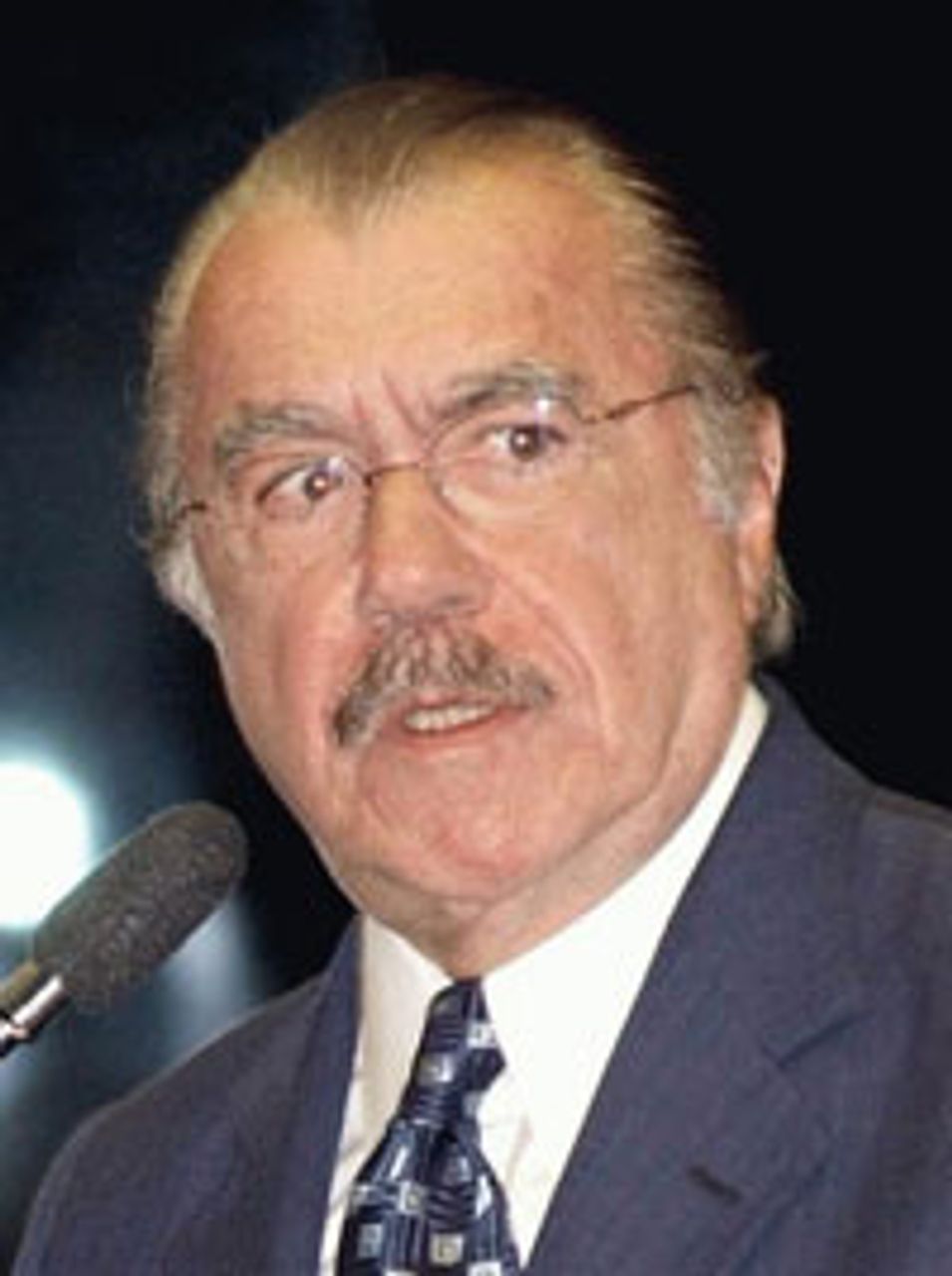
SarneyJosé Sarney
On February 20, 1987 Brazil’s President José Sarney announced a moratorium on payment of the country’s debt to the International Monetary Fund (IMF). The action, in effect, a default, shook the world financial system. Bank stocks fell on Wall Street after the announcements; among Brazil’s biggest creditors were Citicorp, Bank of America and Chase Manhattan.
Sarney made the announcement in a 15-minute televised speech. He indicated that his regime intended to resume the payments at some future date, while explicitly warning the international bankers that the type of austerity measures they were demanding would drive Brazil to the brink of social revolution.
It was estimated that Latin America and Africa collectively had outstanding debt of $973 billion. Governments on both continents had been soliciting some form of debt relief for at least the previous two years.
With a total foreign debt of $110 billion and interest payments of over $8.3 billion annually, Brazil was Latin America’s largest debtor nation. Sarney’s attempt to control inflation, called the “Cruzado Plan”—a system of price and wage freezes, modelled on similar plans in Argentina and Israel—failed because of resistance in the working class.
Brazil’s announcement was followed by a statement February 22 from the politically unstable Cordero regime in Ecuador—Latin America’s eighth largest debtor—that it would postpone interest payments until June, after failing to make its $38 million January payment. Additionally, on the same day as Sarney’s speech, Argentina—with a foreign debt of $53 billion—announced that it might suspend payments if it did not get new loans. Mexico, Chile and Venezuela were at the same time renegotiating their terms with foreign banks.

50 years ago: John Glenn becomes first American to orbit Earth

orbitPhoto taken by Glenn from space
On February 20, 1962 NASA astronaut John Glenn became the first American to orbit the earth when his satellite, Friendship 7 of the Mercury-Atlas 6 mission, passed three times around the earth in a span of 4 hours and 55 minutes.
The satellite was blasted off from an Atlas LV-3B launch vehicle in Cape Canaveral, Florida. After a month of delays due to minor design and mechanical errors, the flight proceeded with minimal problems, and Glenn landed in good health in the waters of the Caribbean about 40 miles from the expected location.
Glenn was promoted as a national hero by the Kennedy administration and the US media (which eventually took him to the US Senate). His achievement, very much bound up with the Cold War, came after a breakneck campaign to catch up with the Soviet Union’s space program, which had sent cosmonaut Yuri Gagarin into orbit nearly a year earlier. (see: Fifty years since the first manned spaceflight)

75 years ago: Sit-down strike wave spreads

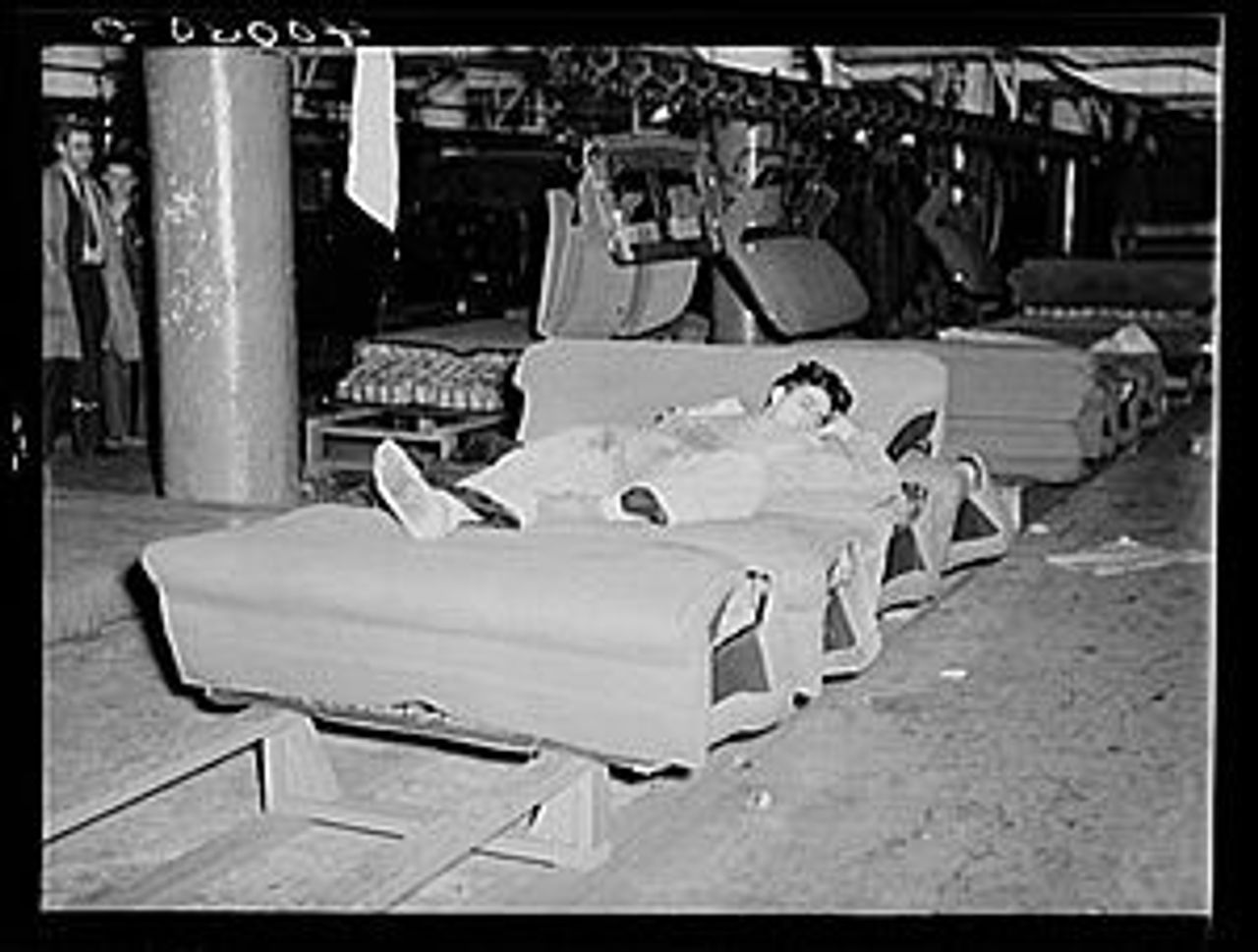
FlintFlint sit-down striker
Two weeks after the Flint, Michigan sit-down strikers forced General Motors to offer concessions and recognize their new union, the United Auto Workers (UAW), workers across the US and in other countries occupied their workplaces, including coal miners in both Hungary and Australia.
On February 20, 1937 strikes broke out at GM plants in St. Louis, Missouri and in the province of Ontario in Canada.
On the morning of the same day, 120 police and deputies failed in an attempt to evict sit-down strikers from Fansteel Metallurgical Corporation facilities in Waukegan, Illinois. When hundreds of teargas canisters were fired into the Fansteel buildings, the strikers responded by spraying their assailants with acid from converted fire extinguishers.
On February 23 sit-down strikes broke out in shipyards at Groton, Connecticut owned by the Electric Boat Company (EBC). Work on four submarines being built to US military specification was brought to a halt. The strike was called by the Industrial Union of Marine and Shipbuilding Workers of America to force the shipyard owners to recognise the union as the exclusive bargaining agent.
Also on February 23, production at the Douglas aircraft factory in Santa Monica, California was brought to a halt when 5,500 workers downed tools and occupied the factory after the dismissal of two employees for union activity.
The occupations at Douglas and Fansteel were suppressed by massive police interventions, bringing to the fore the revolutionary implications of the sit-down wave. In both cases, the courts awarded employers eviction orders, which were then followed by large-scale and heavily-armed police threats against the occupiers.

100 years ago: The Battle of Beirut

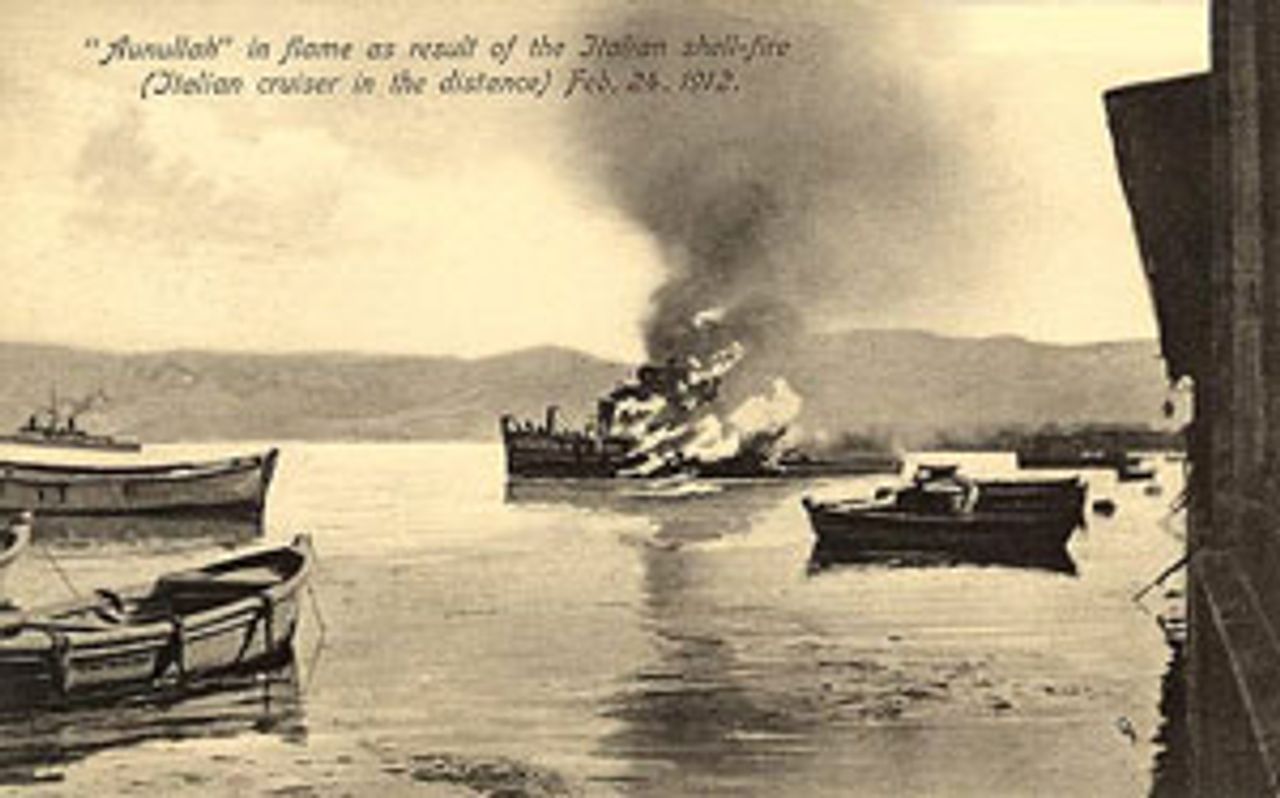
BeirutPostcard depicting Battle of Beirut
On February 24, 1912, Italy attacked the Ottoman port of Beirut as part of its bid to annex Ottoman territory in the Italo-Turkish war. The Italian armoured cruiserGiuseppe Garibaldi and the gunboat Volturnobombarded the harbour, sinking an Ottoman casemate corvette, Avnillah, six lighters and a torpedo boat, Angora.
The Turkish naval presence at Beirut was completely destroyed, with heavy casualties on the Ottoman side. Fires broke out on shore as a result of stray gunfire, destroying buildings, including the city’s customs house and several banks, and resulting in civilian casualties.
Italy’s attack on Beirut was an attempt to widen the theatre of war in its conflict with the tottering Ottoman Empire. Only five months earlier, Italy had annexed the provinces of Tripolitania, Fezzan and Cyrenaica, which form modern-day Libya.
In January 1912, Italy had used its cruisers and destroyers to sink seven Turkish gunboats and a yacht in the Battle of the Kufunda Bay in the Red Sea. In retaliation for the attack on Beirut, the Ottoman government ordered the vilayets of Aleppo, Damascus and Beirut to expel all Italian citizens within their jurisdictions. Around 60,000 Italians were deported after being given 15 days to leave.
Having achieved naval supremacy in the South Mediterranean Sea as a result of the attack on Beirut, Italy gained unrestricted access to the Suez Canal. It was also able to strengthen its forces in Eritrea without threat from the Ottoman Empire.